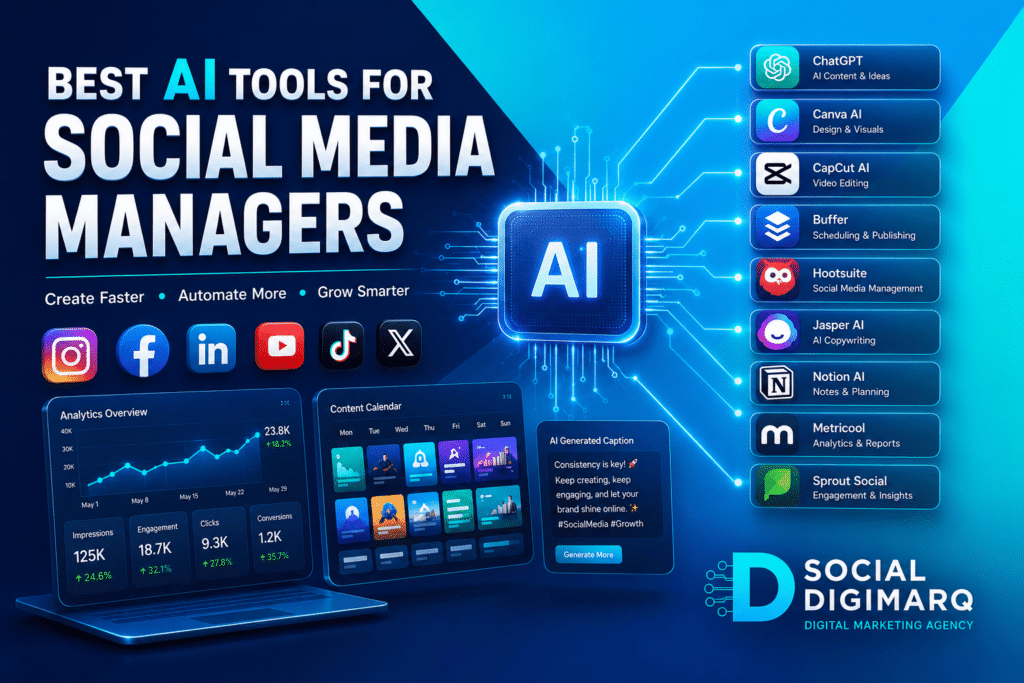
Best AI Tools for Social Media Managers in 2026: Complete Guide to Faster Content Creation and Growth
Best AI Tools for Social Media Managers in 2026: Complete Guide to Faster Content Creation and Growth Introduction Social media management is becoming more complex every year. Businesses are expected to publish high-quality content consistently, engage with audiences across multiple platforms, analyze performance data, respond to customer inquiries, and stay ahead of changing algorithms. Managing all of these tasks manually can be time-consuming and inefficient. This is why the Best AI Tools for Social Media Managers have become essential in 2026. Artificial intelligence is helping marketers create content faster, automate repetitive tasks, improve audience targeting, generate creative ideas, optimize posting schedules, and make data-driven decisions with greater accuracy. Whether you are a business owner, freelancer, agency professional, or social media manager, using the Best AI Tools for Social Media Managers can significantly increase productivity while improving content quality and campaign performance. In this comprehensive guide, you’ll discover the top AI-powered tools, how they work, their advantages, real-world applications, and how to choose the right solutions for your social media strategy in 2026. What Are the Best AI Tools for Social Media Managers? The Best AI Tools for Social Media Managers are software platforms that use artificial intelligence, machine learning, and automation to simplify and enhance social media marketing activities. These tools can help with: Instead of spending hours performing repetitive tasks manually, social media managers can use AI to streamline workflows and focus on strategy, creativity, and business growth. Why Best AI Tools for Social Media Managers Matter in 2026 The digital marketing landscape is evolving rapidly. Social platforms are becoming more competitive, audiences expect personalized experiences, and content production demands continue to increase. The Best AI Tools for Social Media Managers help solve several major challenges: Faster Content Production AI tools can generate captions, post ideas, content calendars, and creative concepts in seconds. Better Audience Insights Advanced analytics help marketers understand audience behavior and engagement trends. Improved Efficiency Automation reduces repetitive work, allowing teams to focus on high-value activities. Enhanced Creativity AI assists with brainstorming content ideas, campaign concepts, and visual designs. Data-Driven Decision Making AI-powered reporting provides actionable recommendations for improving campaign performance. Key Benefits of Using Best AI Tools for Social Media Managers Increased Productivity Tasks that previously required hours can now be completed in minutes. Consistent Content Publishing AI scheduling tools help maintain a consistent posting frequency. Better Engagement Rates AI recommendations improve content relevance and audience interaction. Improved ROI Automation reduces costs while improving marketing effectiveness. Scalable Social Media Management Businesses can manage multiple accounts more efficiently using AI-powered workflows. How to Choose the Best AI Tools for Social Media Managers Before investing in AI software, consider the following factors. Define Your Goals Ask yourself: Consider Ease of Use The best tools should be beginner-friendly while offering advanced capabilities. Evaluate Integration Options Choose tools that integrate with platforms such as: Review Pricing Consider both free and premium options based on your business requirements. Check AI Capabilities Look for features such as: Top Categories of Best AI Tools for Social Media Managers The most effective AI tools generally fall into these categories: AI Content Writing Tools AI Graphic Design Tools AI Video Creation Tools AI Scheduling Tools AI Analytics Tools AI Social Listening Tools AI Customer Engagement Tools In the next section, we will explore the actual Best AI Tools for Social Media Managers in 2026, including their features, advantages, pricing considerations, and ideal use cases. Step-by-Step Guide: Best AI Tools for Social Media Managers in 2026 Now that you understand why AI is transforming social media marketing, let’s explore the actual Best AI Tools for Social Media Managers and how they can help improve productivity, engagement, and business growth. 1. ChatGPT – Best AI Tool for Content Creation ChatGPT has become one of the most valuable tools for social media professionals. Key Features • Caption generation • Content calendar planning • Reel script writing • Hashtag suggestions • Blog-to-social-post conversion • Content repurposing Practical Example A social media manager can turn a 2,000-word blog into: • Instagram captions • LinkedIn posts • Facebook content • Twitter threads within minutes. Why It’s One of the Best AI Tools for Social Media Managers ChatGPT significantly reduces content creation time while helping maintain consistency across platforms. 2. Canva AI – Best AI Design Tool Visual content is critical for social media success. Canva AI helps marketers create professional graphics without advanced design skills. Key Features • Magic Design • AI Background Remover • AI Image Generation • AI Text Suggestions • Brand Kit Integration Practical Example Create: • Instagram posts • Story designs • Carousel graphics • Social media ads in minutes. Expert Recommendation For agencies and freelancers, Canva AI is one of the most practical and affordable AI tools available. 3. CapCut AI – Best AI Video Editing Tool Short-form video continues to dominate social media. CapCut AI helps marketers create engaging content quickly. Key Features • Auto Captions • AI Video Editing • AI Voiceovers • AI Effects • AI Script Assistance Practical Example Convert a simple video recording into a professional Instagram Reel or YouTube Short. Why Social Media Managers Love It CapCut dramatically reduces video production time. 4. Metricool – Best AI Scheduling Tool Publishing content consistently is essential. Metricool helps automate scheduling and performance tracking. Key Features • Content Scheduling • Analytics Dashboard • Competitor Analysis • AI Recommendations Practical Example Schedule an entire month of content in advance. Benefits Better consistency and improved workflow management. 5. Buffer AI Assistant Buffer combines scheduling with AI-powered content generation. Key Features • AI Caption Writing • Post Scheduling • Performance Tracking • Multi-Platform Publishing Best For Small businesses and freelancers managing multiple social accounts. 6. Hootsuite AI Hootsuite remains one of the most popular social media management platforms. Key Features • AI Content Suggestions • Social Listening • Scheduling Automation • Advanced Reporting Practical Example Monitor multiple social media channels from one dashboard. Expert Insight Large organizations benefit significantly from Hootsuite’s reporting capabilities. 7.